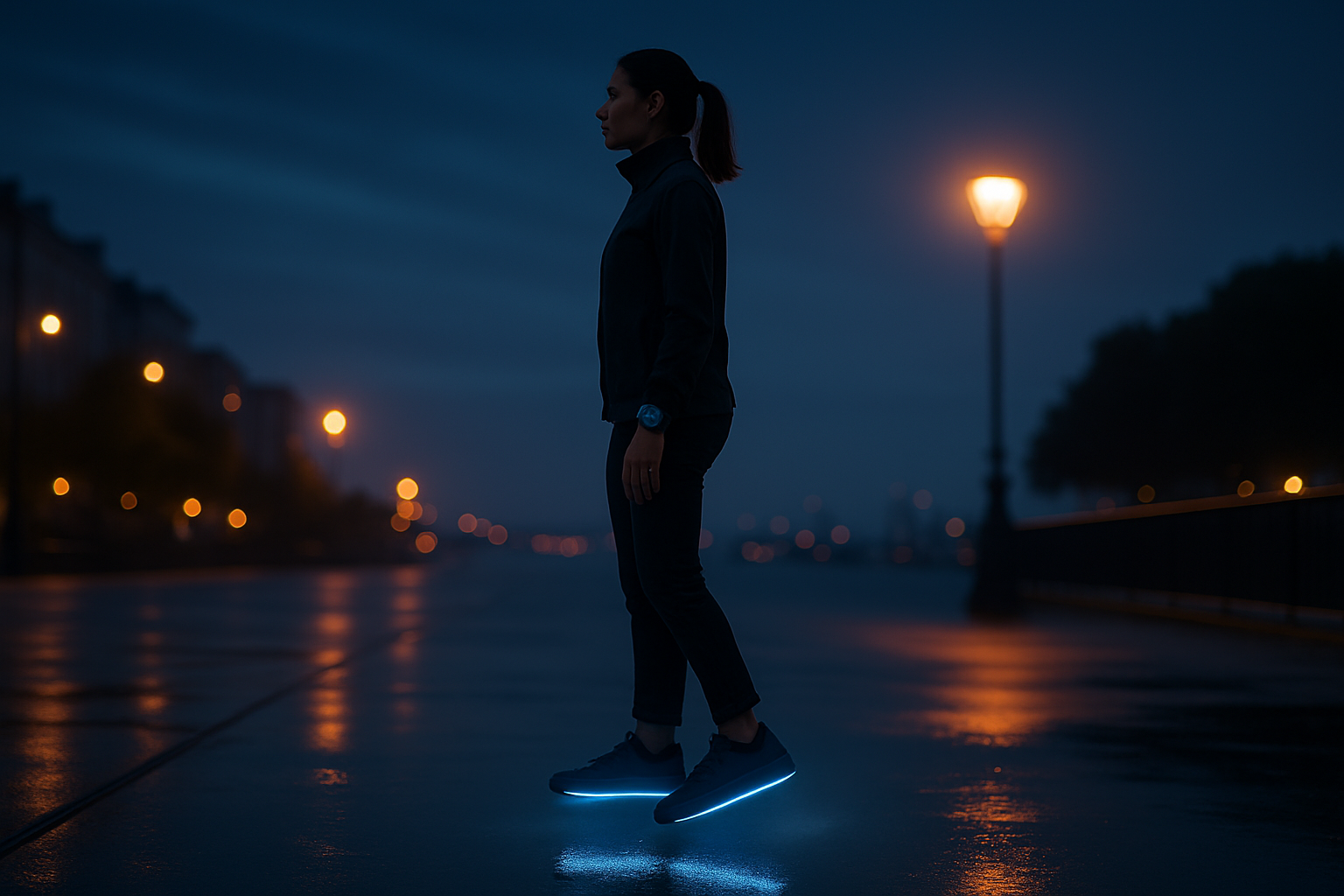
What if we could turn gravity off?
For most of human history, progress meant pushing against something. Wind, water, friction, distance, gravity. We burned fuel to move. We expelled mass to create thrust. We accepted limits because physics told us we had to.
But what if we’ve been thinking about motion the wrong way?
What if instead of pushing through space, we could bend space itself?
There’s an obscure, fascinating figure in the history of alternative propulsion: Thomas Townsend Brown, whose unconventional experiments helped spark decades of curiosity around electrogravitics and gravity-like effects. His life and ideas are explored in The Man Who Mastered Gravity: A Twisted Tale of Space, Time and the Mysteries In Between, a biography written by Paul Schatzkin. Brown’s work lives somewhere between fringe science, early experimentation, and questions mainstream physics still doesn’t fully answer. Some of it reads like science fiction. Some of it reads like unfinished science.
And that’s where things get interesting.
Modern physics already tells us that gravity isn’t really a “force” in the traditional sense. According to Einstein, gravity is the bending of spacetime itself. Mass curves space. Time slows near strong gravity. Distance isn’t fixed the way our intuition thinks it is. The universe is flexible.
So here’s the mind-bender:
What if propulsion didn’t require thrust at all?
No fuel.
No exhaust.
No reaction mass.
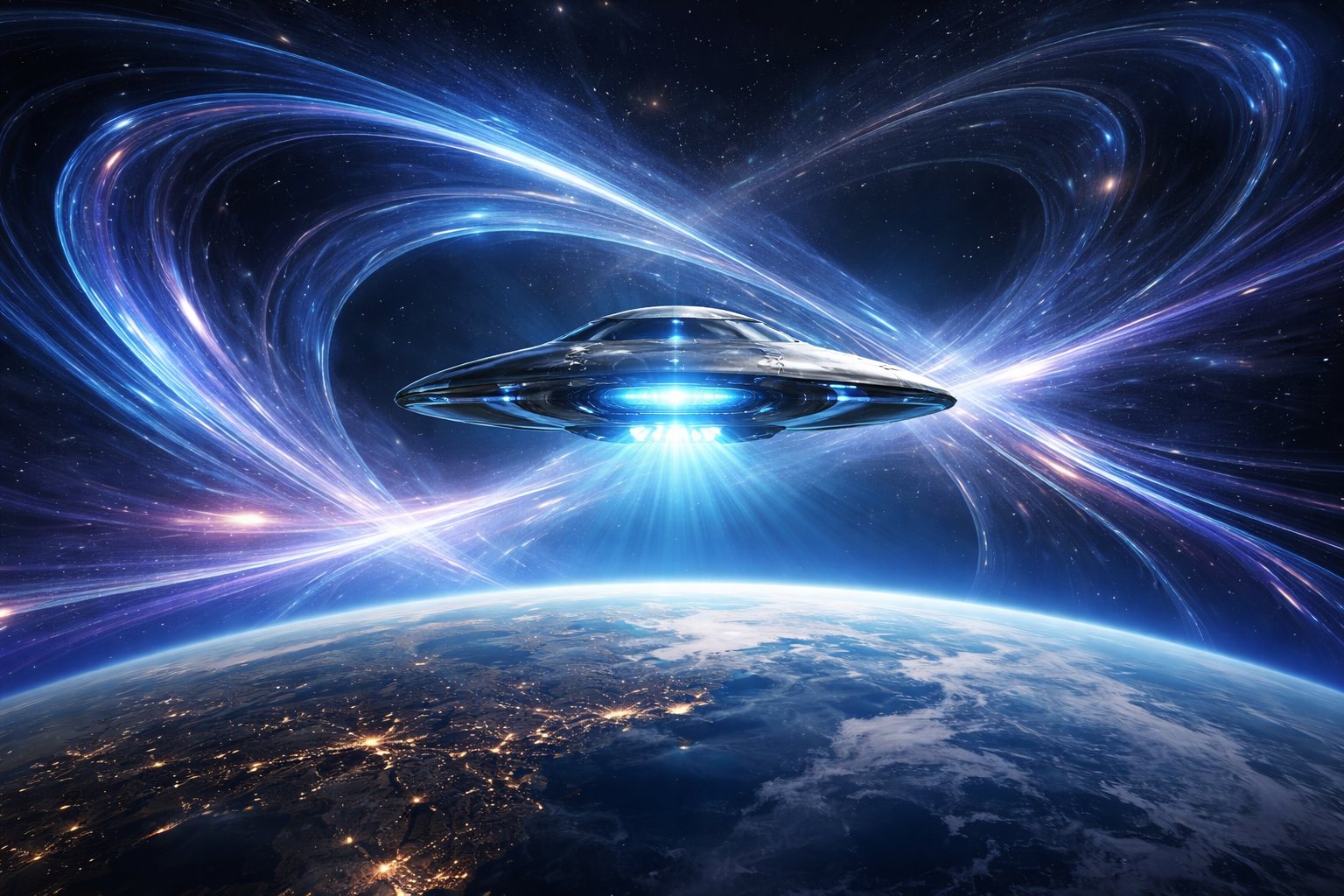
Instead of pushing an object forward, you manipulate gravity waves or spacetime geometry so the distance between Point A and Point B collapses. From the outside, it looks like instant acceleration. Inside the craft, it feels like standing still while the universe moves around you.
You don’t “go fast.”
You make the destination come to you.
That sounds wild. It should. But bending space isn’t fantasy. We already measure gravitational waves. We already manipulate electromagnetic fields with extreme precision. We already know spacetime is malleable under the right conditions. The only thing missing is control.
And control is always the last hard part.
Now let’s have some fun with the implications.
If gravity manipulation were possible, travel changes completely. No more G-forces crushing pilots. No sonic booms. No heat shields. No jet fuel. No rocket stages. No atmospheric limitations. You could move silently. Seamlessly. From city to orbit. From Earth to deep space. From one side of a planet to the other without “crossing” the distance in between.
Energy systems change too. If spacetime itself becomes a medium you can shape, transportation stops being about engines and starts being about field control. Navigation becomes geometry. Engineering becomes about sculpting reality at a microscopic level.
And then there’s the bigger thought experiment.
If you can bend space to collapse distance, what else can you bend?
Communication latency disappears.
Exploration becomes personal.
Search becomes physical, not digital.
Imagine search and discovery not just as finding information, but finding places, opportunities, resources, people, entire worlds — instantly reachable because distance is no longer a constraint.
At eFind, we don’t pretend to have anti-gravity figured out. We’re not claiming breakthrough physics. But we are obsessed with one idea: the tools we build tomorrow will look impossible to the people of yesterday.
There was a time when instant global communication sounded like magic.
There was a time when flying sounded ridiculous.
There was a time when carrying a supercomputer in your pocket felt insane.
The future always starts as a joke, then a theory, then a prototype, then a platform.
Gravity manipulation sits in that strange zone between speculation and frontier science. It challenges how we think about movement, energy, and limits. And even if the exact mechanism turns out differently than anyone expects, the mindset it encourages is the real point:
Don’t ask how to go faster.
Ask how to remove the idea of distance altogether.
That’s how breakthroughs actually happen.
At eFind, we build tools for discovering what’s possible. Sometimes that means better search. Sometimes that means better AI. And sometimes that means asking questions that feel uncomfortable, impractical, or decades too early.
Those are usually the questions that matter most.
If gravity can be bent, then so can our assumptions about what’s possible.
The only real limitation is imagination.